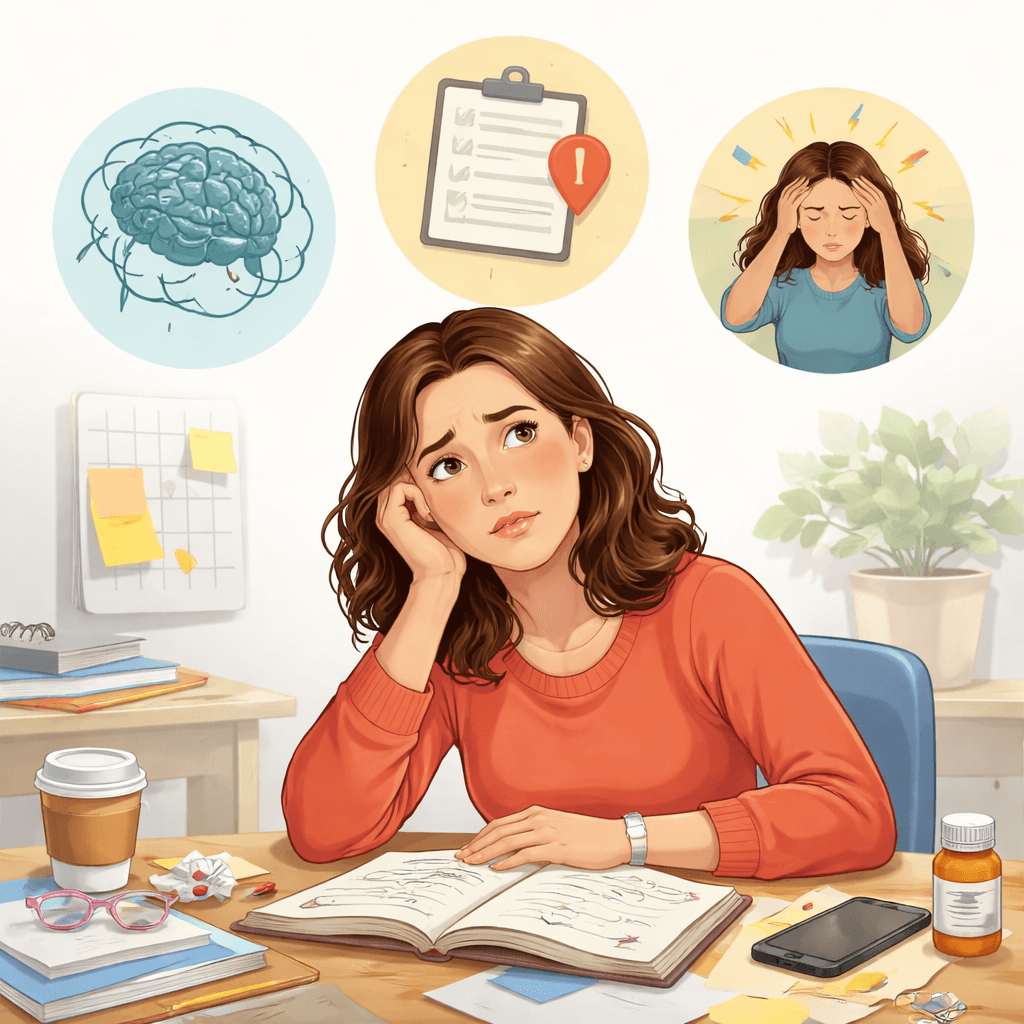
ADHD Explained: Understanding Attention Deficit Hyperactivity Disorder
Attention Deficit Hyperactivity Disorder (ADHD) affects millions of children and adults worldwide, yet it remains widely misunderstood. Far from simply being "easily distracted," ADHD is a complex neurodevelopmental condition that impacts executive function, emotional regulation, and daily life in profound ways.
This comprehensive guide explores what ADHD actually is, how it differs from ADD, why it's often missed in certain populations, and strategies for thriving with an ADHD brain.
What Is ADHD?
ADHD is a neurodevelopmental disorder characterized by persistent patterns of inattention, hyperactivity, and impulsivity that interfere with functioning or development. It's not a character flaw, laziness, or lack of intelligence—it's a difference in how the brain develops and functions.
Key Facts:
- Affects approximately 5-7% of children globally
- Persists into adulthood for about 60% of those diagnosed as children
- Has strong genetic components (heritability of 70-80%)
- Involves differences in dopamine regulation and brain structure
- Is recognized by every major medical organization worldwide
ADD vs ADHD: What's the Difference?
One of the most common questions we receive: What's the difference between ADD and ADHD?
The short answer: ADD (Attention Deficit Disorder) is an outdated term. The current medical terminology uses ADHD for all presentations, with three subtypes:
ADHD Predominantly Inattentive Presentation
Previously called "ADD," this presentation features:
- Difficulty sustaining attention on tasks
- Easily distracted by unrelated thoughts or stimuli
- Forgetfulness in daily activities
- Losing things necessary for tasks
- Difficulty organizing tasks and managing time
- Avoiding tasks requiring sustained mental effort
ADHD Predominantly Hyperactive-Impulsive Presentation
Features include:
- Fidgeting, squirming, restlessness
- Difficulty staying seated when expected
- Running or climbing inappropriately (in children)
- Difficulty engaging in quiet activities
- Talking excessively
- Interrupting others
- Difficulty waiting turns
ADHD Combined Presentation
Features significant symptoms from both categories—the most common presentation.
The ADHD Brain
Neurological Differences
ADHD brains show measurable differences:
- Prefrontal cortex: Slightly smaller, develops more slowly
- Dopamine regulation: Differences in dopamine transporters and receptors
- Default mode network: Different activation patterns
- Executive function networks: Altered connectivity
These differences aren't deficits—they're variations that come with both challenges and strengths.
Executive Function Challenges
Executive functions are the brain's management system. ADHD commonly affects:
- Working memory: Holding information while using it
- Cognitive flexibility: Shifting between tasks or perspectives
- Inhibitory control: Stopping automatic responses
- Planning and prioritization: Organizing steps toward goals
- Time perception: Estimating and managing time
- Emotional regulation: Managing emotional responses
The Interest-Based Nervous System
ADHD brains respond strongly to:
- Interest: Fascinating topics create hyperfocus
- Challenge: Urgency or competition engages attention
- Novelty: New things capture attention easily
- Urgency: Deadlines create motivation (often at the last minute)
This explains why someone with ADHD can focus for hours on video games but struggle with homework—it's not laziness, it's neurology.
ADHD Across Different Populations
ADHD in Women and Girls
ADHD is significantly underdiagnosed in girls and women:
- Girls more often present with inattentive symptoms (less disruptive, less noticed)
- Symptoms may be attributed to anxiety, depression, or personality
- Hormonal fluctuations affect symptom severity
- Social masking can hide symptoms
- Average age of diagnosis for women is later than men
ADHD in Adults
Many adults discover ADHD only after their children are diagnosed:
- Symptoms may have been managed through structure or coping strategies
- Life changes (new job, parenthood) can overwhelm existing coping mechanisms
- Adult symptoms often manifest as:
- Chronic lateness and time blindness
- Difficulty with paperwork and administration
- Relationship challenges from inattention
- Career underperformance relative to ability
- Emotional dysregulation
Common ADHD Experiences
ADHD Paralysis
ADHD paralysis describes the frustrating experience of being unable to start tasks despite wanting to. It includes:
Task paralysis: Knowing what to do but being unable to begin
Choice paralysis: Overwhelm when facing multiple options
Mental paralysis: Mind going blank under pressureThis isn't laziness—it's a neurological difficulty with task initiation.
Rejection Sensitive Dysphoria (RSD)
Many people with ADHD experience intense emotional responses to perceived rejection or criticism:
- Overwhelming emotional pain from criticism
- Interpreting neutral interactions as negative
- People-pleasing to avoid rejection
- Avoiding situations with rejection potential
Time Blindness
The inability to accurately perceive time passing:
- "Five more minutes" becomes an hour
- Chronic lateness despite intentions
- Difficulty estimating task duration
- Living in the "eternal now"
ADHD vs Autism: Understanding the Overlap
ADHD and autism share some features but are distinct conditions. Many people have both. See our detailed comparison: ADHD vs Autism.
Similarities:
- Executive function challenges
- Sensory sensitivities
- Social difficulties (different causes)
- Hyperfocus on interests
Differences:
- ADHD: Seeking stimulation; Autism: Often avoiding overstimulation
- ADHD: Variable attention; Autism: Intense focus on specific interests
- ADHD: Impulsivity; Autism: Preference for routine
- ADHD: Often seeks social interaction; Autism: Social interaction often draining
Living Well with ADHD
Treatment Options
Medication:
- Stimulants (Adderall, Ritalin, Vyvanse): First-line treatment, 70-80% effective
- Non-stimulants (Strattera, Wellbutrin): Alternatives for those who don't respond to stimulants
- Medication isn't a cure—it's a tool that makes other strategies more effective
Therapy:
- Cognitive Behavioral Therapy (CBT) adapted for ADHD
- ADHD coaching for practical strategies
- Therapy for co-occurring anxiety or depression
Lifestyle:
- Regular exercise significantly improves symptoms
- Consistent sleep schedule
- Protein-rich breakfast
- Limiting screen time before bed
Practical Strategies
External reminders (alarms, timers, apps)
Body doubling (working alongside others)
Breaking tasks into smaller steps
Using the "2-minute rule" (if it takes 2 minutes, do it now)
Creating artificial deadlines
Building routines and rituals
Accepting imperfectionADHD Strengths
ADHD isn't all challenges—many traits are genuinely advantageous:
- Creativity: Novel thinking and connections
- Hyperfocus: Intense concentration on engaging topics
- Energy: Enthusiasm and drive
- Resilience: Overcoming challenges builds strength
- Crisis performance: Thriving under pressure
- Empathy: Deep understanding of struggles
Many entrepreneurs, artists, and innovators have ADHD.

Related Articles
ADD vs ADHD: What's the Difference?
ADHD Paralysis: Why You Can't Start Tasks
ADHD in Girls: Often Missed Signs
ADHD vs Autism: Understanding the Differences
ADHD Coping StrategiesRelated Topics
Cognitive Learning Theories — How we learn differently
Critical Thinking Exercises — Building focus skills
Philosophical Questions — Deep thinking topics