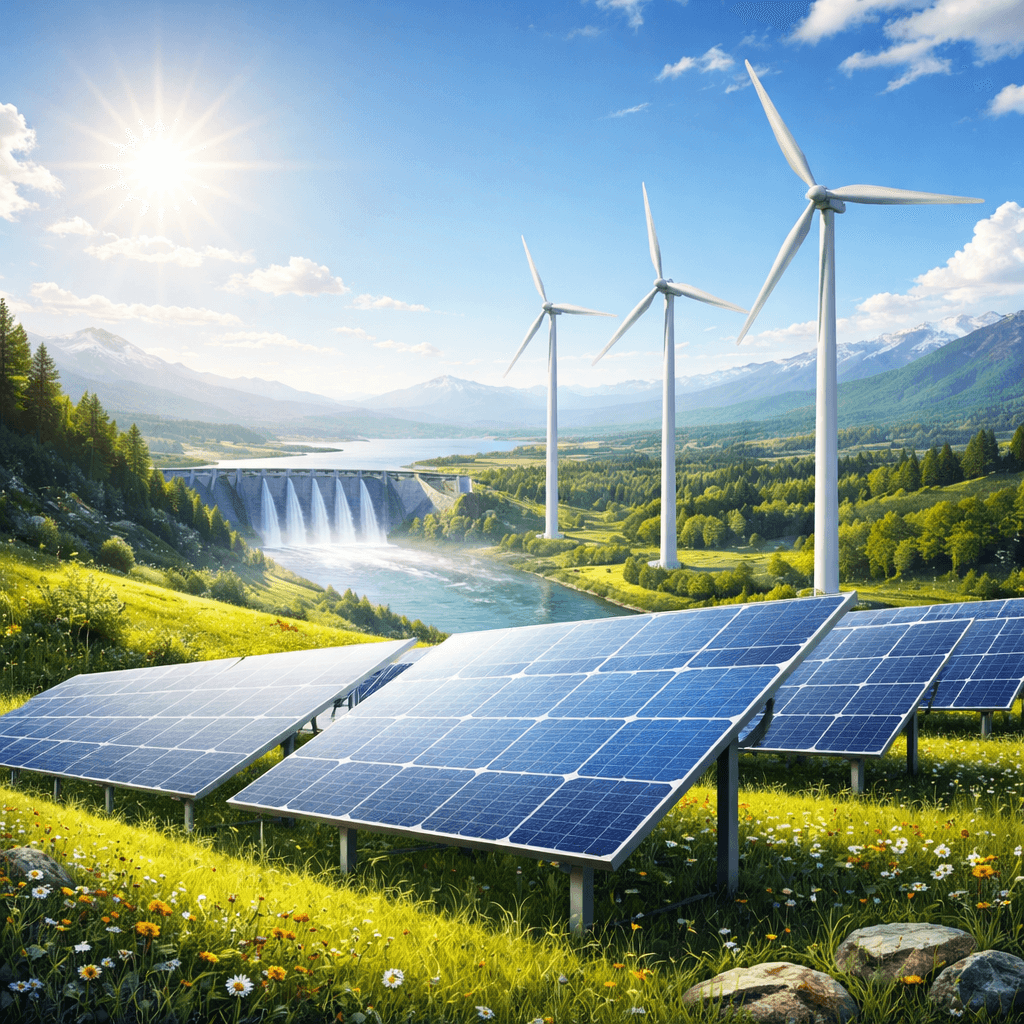
Renewable Energy: Powering a Sustainable Future
Renewable energy comes from sources that naturally replenish—sunlight, wind, water, and heat from the Earth. Unlike fossil fuels, renewables don't deplete and produce little or no greenhouse gas emissions during operation. The clean energy transition is among the most important transformations of our time.
Why Renewable Energy Matters
The shift to renewables addresses critical challenges:- Climate change: Reducing CO₂ emissions to limit global warming
- Energy security: Domestic resources reduce dependence on imports
- Air quality: No combustion means cleaner air
- Economic opportunity: Fastest-growing job sector in energy
- Cost competitiveness: Solar and wind now often cheapest power sources
This isn't just environmentalism—it's economics and security.
Solar Energy
How Solar Works
Photovoltaic (PV) Cells- Semiconductors (usually silicon) absorb photons
- Energy knocks electrons loose, creating current
- Cells combined into panels, panels into arrays
- Direct current (DC) converted to AC for use
Concentrated Solar Power (CSP)- Mirrors focus sunlight to heat fluid
- Steam drives turbines to generate electricity
- Can include thermal storage for night use
Solar Applications
Utility-Scale- Large solar farms (hundreds of MW)
- Feed electricity to the grid
- Lowest cost per watt
Rooftop/Distributed- Homes and businesses
- Net metering: sell excess to grid
- Energy independence
Off-Grid- Remote locations without grid access
- Combined with batteries
- Powers billions in developing world
Solar Economics
Costs have dropped 90%+ since 2010:- Panel costs: ~$0.20/watt (from $2+)
- Utility-scale: Often cheapest new electricity
- Rooftop: Payback in 5-10 years
- 30+ year lifespan
Challenges
- Intermittency (only works when sun shines)
- Land use for large installations
- Manufacturing energy and materials
- Grid integration at high penetration
Wind Energy
How Wind Turbines Work
1. Wind turns turbine blades (like airplane wings in reverse)
2. Blades spin a rotor connected to generator
3. Generator converts mechanical energy to electricity
4. Transformer increases voltage for transmission
Modern turbines are engineering marvels:- Tower heights: 80-160 meters
- Blade lengths: 50-80 meters
- Capacity: 2-15+ megawatts each
Onshore Wind
- Land-based turbines
- Well-established technology
- Cheapest form of new electricity in many regions
- Challenges: Visual impact, noise, wildlife
Offshore Wind
- Turbines in ocean waters
- Stronger, more consistent winds
- Higher capacity factors
- Higher costs but falling rapidly
- Major growth in Europe, now expanding globally
Wind Economics
- Costs down ~70% since 2010
- Competitive or cheaper than fossil fuels
- Long-term contracts provide price certainty
- Significant job creation (installation, maintenance)
Hydroelectric Power
How Hydro Works
Conventional (Dams)- Dams create reservoirs
- Water released through turbines
- Spins generators to produce electricity
- Can be dispatched on demand (not intermittent)
Run-of-River- Diverts portion of river flow
- Minimal storage
- Less environmental impact than dams
Pumped Storage- Pump water uphill when power is cheap
- Release downhill when power is needed
- Giant battery for the grid
- Essential for grid stability
Hydro Advantages
- Reliable, dispatchable power
- Low operating costs
- Long lifespan (50+ years)
- Provides grid stability services
- Pumped storage enables more renewables
Hydro Challenges
- Environmental impact on rivers and fish
- Displacement of communities
- Limited new sites available
- Drought vulnerability
Global Hydro
- Largest renewable source historically
- ~16% of global electricity
- Major: China, Brazil, Canada, U.S.
- Limited growth potential in developed countries
Other Renewables
Geothermal
Heat from Earth's interior:- Steam or hot water drives turbines
- Consistent 24/7 baseload power
- Limited to geologically active areas
- Iceland, Kenya, California, Indonesia
Biomass
Organic material for energy:- Wood, agricultural waste, energy crops
- Burned directly or converted to biogas/biofuels
- Carbon neutral if sustainably managed
- Debates over land use and true emissions
Tidal and Wave
Ocean energy:- Predictable (tides follow moon)
- High energy density
- Technology still developing
- High costs, challenging environment
Energy Storage
Storage solves intermittency—the key challenge for solar and wind.
Battery Storage
Lithium-Ion- Dominant technology
- Costs down 90% since 2010
- 4-8 hour duration typical
- Grid-scale installations growing rapidly
Emerging Technologies- Sodium-ion (cheaper materials)
- Solid-state (higher density)
- Flow batteries (longer duration)
- Iron-air batteries (cheap, long duration)
Other Storage
Pumped Hydro: 90%+ of grid storage today
Compressed Air: Store energy in underground caverns
Hydrogen: Electrolysis creates fuel for long-term storage
Thermal Storage: Molten salt, heated rocks
Why Storage Matters
- Enables higher renewable penetration
- Provides grid stability services
- Reduces need for fossil fuel backup
- Makes 100% renewable grids possible
Grid Integration
Challenges of Variable Power
Traditional grids designed for dispatchable fossil/nuclear:- Supply must match demand constantly
- Renewables don't follow demand
- Requires new approaches
Solutions
Demand Response: Shift consumption to match supply
Interconnection: Connect regions (wind blows somewhere)
Storage: Store excess, release when needed
Forecasting: Predict renewable output hours ahead
Flexible Generation: Gas plants that ramp quickly (transition)
Overbuilding: Build more capacity than needed
Smart Grids
Modern grids use digital technology:- Real-time monitoring and control
- Two-way power flow (distributed generation)
- Automated demand response
- EV charging optimization
The Energy Transition
Current Status
Renewables growing rapidly:- ~30% of global electricity (hydro + wind + solar)
- Solar and wind doubling every few years
- Many countries targeting 100% clean power
Key Drivers
- Economics: Renewables often cheapest option
- Policy: Subsidies, mandates, carbon pricing
- Climate: Net-zero commitments
- Technology: Continued cost reductions
- Public demand: Support for clean energy
Remaining Challenges
- Intermittency and storage
- Grid infrastructure upgrades
- Industrial heat and transport
- Developing country access
- Mining and material supply chains
- Political and economic resistance
The Path Forward
100% renewable electricity is technically feasible:- Already achieved in some regions/countries
- Requires storage, transmission, and integration
- Timeline: decades, not years
Full decarbonization (including heat, transport, industry) is harder but possible with electrification, green hydrogen, and efficiency.
Related Topics